Best Flooring for Colorado Homes: A Room-by-Room Guide
A room-by-room map of the best flooring for Colorado homes, from living rooms and kitchens to basements and sunrooms, showing how dry winter air, slab moisture and altitude UV change the usual flooring advice.
The best flooring for Colorado homes isn't one product; it's a map that puts the right material in each room of a Front Range house. At Colorado Carpet & Flooring, our Castle Rock showroom has matched floors to Denver metro rooms since 2008, and the rooms that fail are usually the ones where national advice ignored our climate.
Each room below gets one recommendation and the deeper guide to read next.
Four Colorado Conditions That Change the Usual Advice
Most advice is written for sea-level houses with steady humidity, not for the best flooring for Denver homes. Every pick below accounts for these four forces.
| Condition | What it does | Rooms it hits hardest |
|---|---|---|
| Dry winter air | Heated indoor RH can sit at 12 to 20 percent, shrinking wood | Living areas with hardwood |
| Seasonal swings | Monsoon weeks push RH back up, so wood swells and can cup | Any room with solid wood |
| Slab moisture | Concrete passes vapor up from the soil | Basements, slab main floors |
| Altitude UV | UV rises about 2% per 1,000 feet of altitude | South- and west-facing rooms |
The UV figure comes from the EPA's Guide to the UV Index. For hardwood, we target 30 to 50 percent RH year round, with a winter goal of 35 to 40 percent.
Room-by-Room: The Best Flooring for Colorado Homes
Every category mentioned here is on our flooring products page.
Living Rooms and Great Rooms
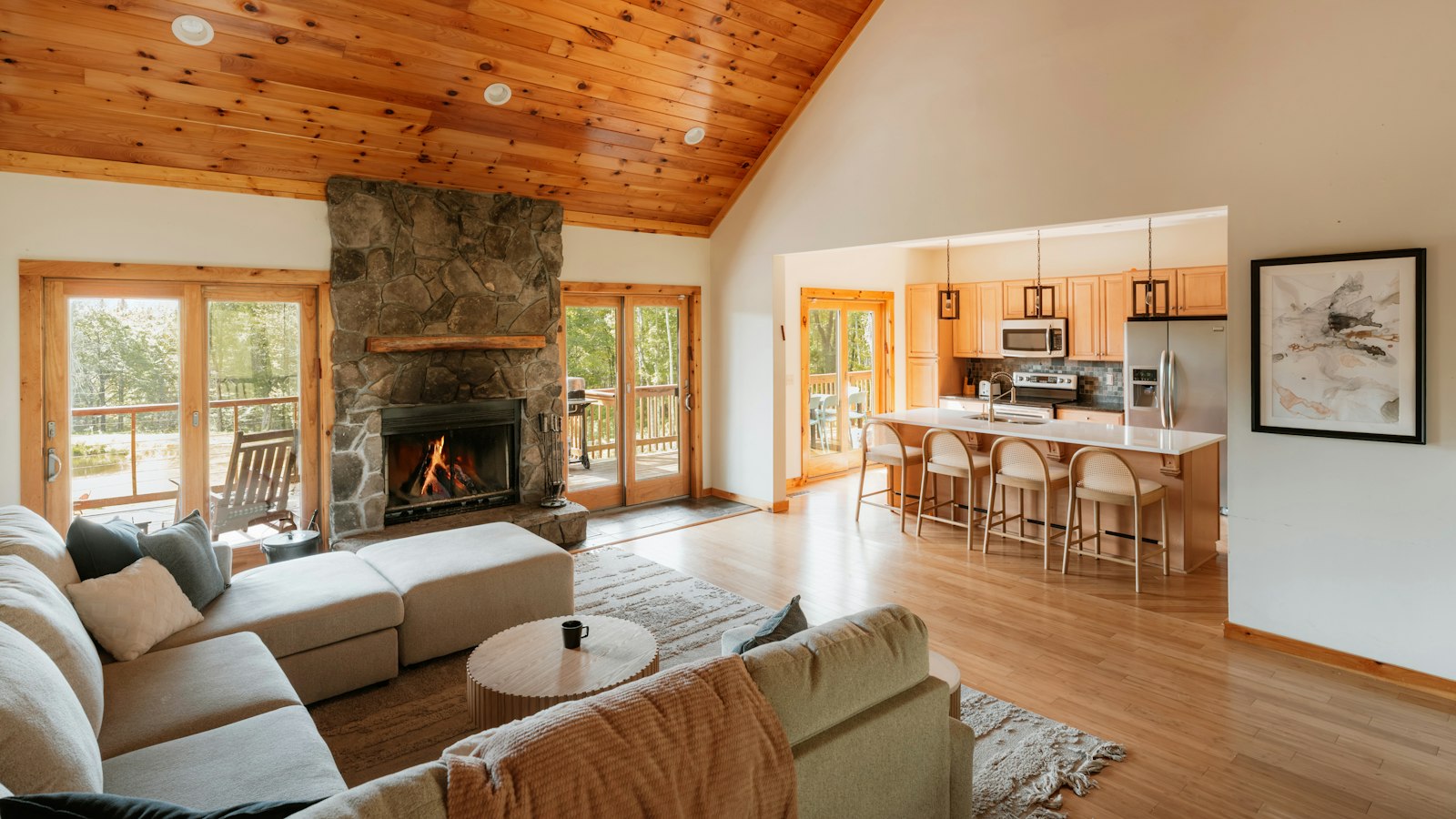
This is where real wood earns its price. We lean toward engineered hardwood because its cross-ply core moves far less than solid boards when January air dries out the house. Solid hardwood still works over plywood if you run a whole-home humidifier and accept some seasonal gapping. LVP is the better call with big dogs, toddlers or a south wall of glass you don't want to babysit. The common failure point is solid wide plank over a slab with no humidity control. The full trade-off is in our hardwood vs. LVP comparison for Castle Rock homes.
Kitchens
Waterproof LVP is our default Front Range kitchen floor. It shrugs off dishwasher drips, dog bowls and daily mopping, and a rigid SPC core resists dents from dropped pans. Engineered hardwood works for careful households that wipe spills fast. Cork suits cooks who stand for hours, as long as standing water never sits on it. Our dedicated kitchen flooring guide compares all four in detail. For a quick upgrade, see the one-day kitchen floor swap we outline for families.
Bathrooms and Laundry Rooms
Both rooms need a floor that treats water as routine. That means 100% waterproof luxury vinyl plank or tile-look LVT, chosen with the manufacturer's water-exposure warranty in mind. Standard laminate is water-resistant but not waterproof, so it stays out, and solid hardwood never goes near a shower. Laundry rooms add vibration, appliance weight and the occasional failed supply hose. Start with our luxury vinyl lineup for bathrooms and laundry rooms.
A remodel mistake we see often is one hardwood floor running unbroken from the living room into the kitchen and powder bath. Splitting materials at the wet-room line costs a transition strip. Skipping it can cost a run of cupped boards.
Entryways and Mudrooms
Front Range entries take snowmelt, ice melt and spring mud within a few months. We put waterproof SPC or WPC plank here and pair it with a real walk-off mat. SPC's rigid limestone core resists dents and temperature changes near exterior doors. Hardwood at the front door needs strict mat discipline; our post-winter check looks for swelling within 3 feet of every entrance. Compare cores on our waterproof flooring options for entries and mudrooms.
Bedrooms
Carpet still wins most bedrooms: warm on a January morning, quiet and soft for kids. We recommend plush or frieze in polyester or triexta, and quality carpet typically lasts 10 to 15 years with proper care (premium nylon can reach 20+). Engineered hardwood with an area rug is the other primary-bedroom favorite. Don't accept a thin builder pad; 6 lb density is the minimum for cut pile. See styles and fibers in our carpet collection for Colorado bedrooms.
Upstairs Rooms and Home Offices
Two-story Douglas County homes carry footsteps straight through the joists. A bare joist floor tests around IIC 25 to 30, while carpet over an 8 to 10 lb pad lands around IIC 55 to 70. If you want hard floors upstairs, the underlayment matters more than the plank. Get that assembly right with our guide to sound-reducing floors for upstairs rooms.
Basements
Below grade, rigid core SPC vinyl plank is our top pick, floated over a vapor barrier after the slab is tested. We won't install solid hardwood, traditional laminate, bamboo or broadloom carpet over standard pad down there. If the basement doubles as a workout space, our upcoming home gym flooring guide covers mats and heavy equipment. Testing steps and core choices are in our Colorado basement flooring guide.
Sunrooms and South-Facing Rooms
Altitude sun fades and heats floors faster than people expect. UV-cured factory finishes resist fading better than oiled hardwood, and rotating rugs twice a year keeps color even. For more on sun exposure, read the altitude UV section of our hardwood finishes and textures guide.
Decision Matrix: Whole-House Plans
- If you bought a new build with builder carpet and thin vinyl, then upgrade the main living area, kitchen and stairs first, as our builder-grade upgrade guide for new construction explains.
- If you have large dogs or toddlers, then run waterproof LVP through the main floor and keep carpet to bedrooms.
- If you want hardwood but have no humidifier, then choose engineered over solid.
- If you're setting a budget, then plan on $8,000 to $25,000 for a typical whole-home project, per our Castle Rock flooring cost guide.
Talk Through Your Whole-House Plan With Our Castle Rock Team
Bring a rough floor plan and we'll map materials room by room before anyone quotes square footage. Contact our Castle Rock flooring team to set up a free estimate or showroom visit.

Adam Clements
Owner, Colorado Carpet & Flooring
Adam Clements owns Colorado Carpet & Flooring, the family-owned Castle Rock flooring store that has served the Front Range since 2008 and completed more than 15,000 homes. His team's focus here: whole-home flooring planning for Front Range houses, matching carpet, LVP, laminate and hardwood to each room's moisture, traffic and sun exposure. The crew is factory-trained and certified by Shaw, Mohawk and COREtec, licensed and insured, and every installation is backed by a 1-year labor warranty. Meet the team.