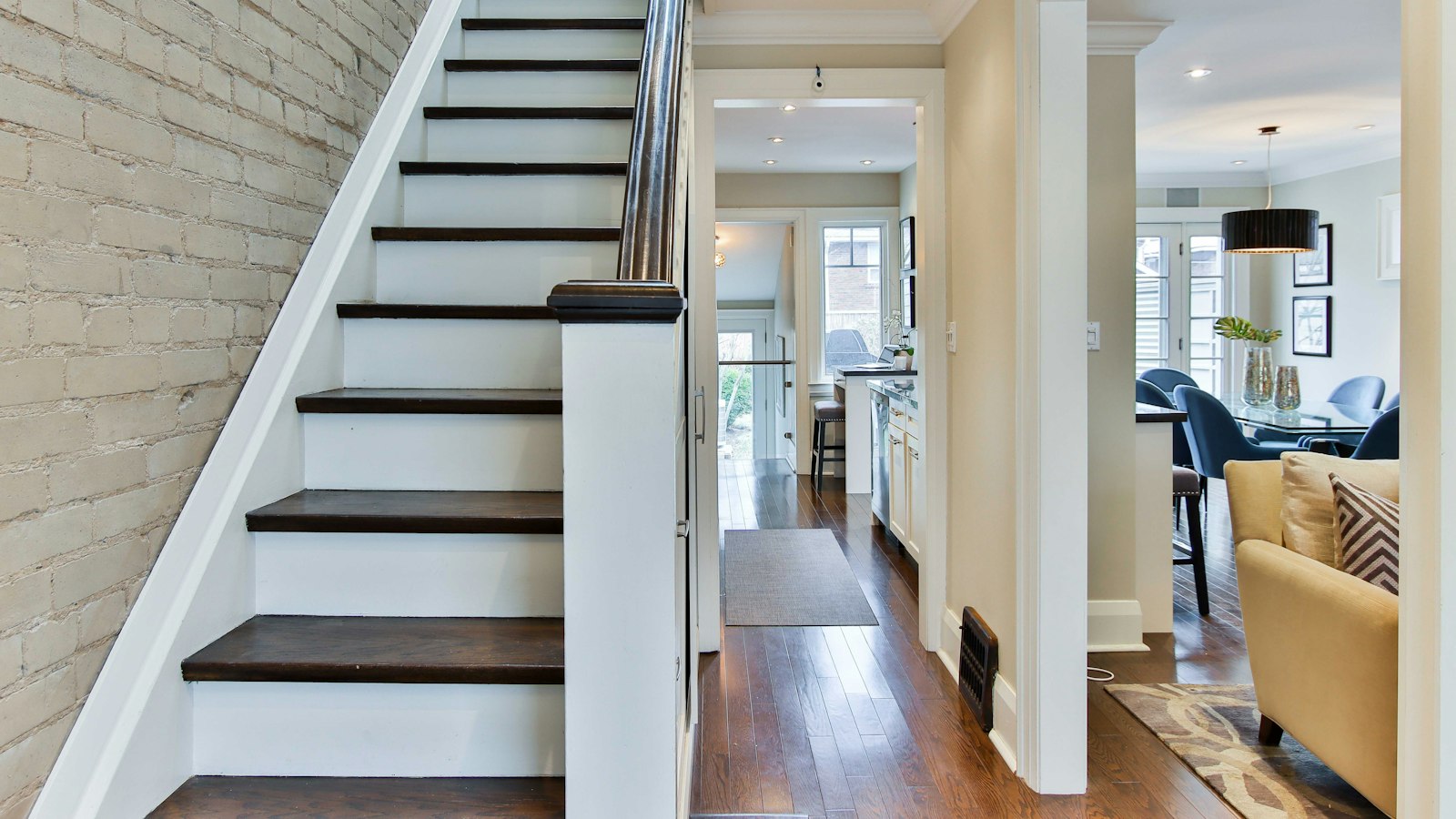
Best Flooring for Stairs: Carpet vs. Hardwood vs. LVP
We compare carpet, hardwood treads and LVP with stair nosing on traction, noise, durability and cost, then match a stair floor to homes with young kids, dogs or older adults, and show where a carpet runner fits in.
The best flooring for stairs is the one that keeps people on their feet first and looks right second. On most Front Range staircases, that narrows the field to three materials: carpet, hardwood treads, and luxury vinyl plank (LVP) with a stair nosing. At Colorado Carpet & Flooring, our Castle Rock flooring store, we install all three across the Denver metro, and we rank them differently on a staircase than we would in a living room.
A stair is a fall surface first. Below we compare the three on safety, noise, durability, cost and look, then match a pick to the household: young kids, dogs, or older adults.
Best Flooring for Stairs: The Three Materials Side by Side
| Factor | Carpet | Hardwood Treads | LVP With Nosing |
|---|---|---|---|
| Traction | Best grip; softer landing on a misstep | Slick in socks unless a runner goes on | Textured surface helps; the nosing must be fully bonded |
| Noise | Quietest; dense pad absorbs footfall | Loudest; every step carries | Hard surface, so footfall carries |
| Durability | Wears first at the nosing | Can be sanded and refinished | Not refinishable; 20+ mil wear layers last longest |
| Best match | Carpeted upper floor | Hardwood main floor | LVP main floor |
Carpet: The Safety Default for Most Households
Carpet is our default stair recommendation for most households, and the reason is footing. Carpet grips a heel and softens a misstep. When stair carpet fails early, it's usually the wrong carpet over the wrong pad.
The details that matter are a low, dense pile, a resilient fiber (our carpet selection page calls nylon best for stairs and high-traffic areas), and a thin, firm cushion. Our carpet padding specs set stairs at an 8 lb density minimum regardless of carpet style, because a thick, soft pad lets the nosing roll under your foot. Our upcoming guide to the best carpet for stairs covers constructions. A stair carpet cost breakdown is publishing soon.
Hardwood Treads: The Best Look, the Least Forgiving
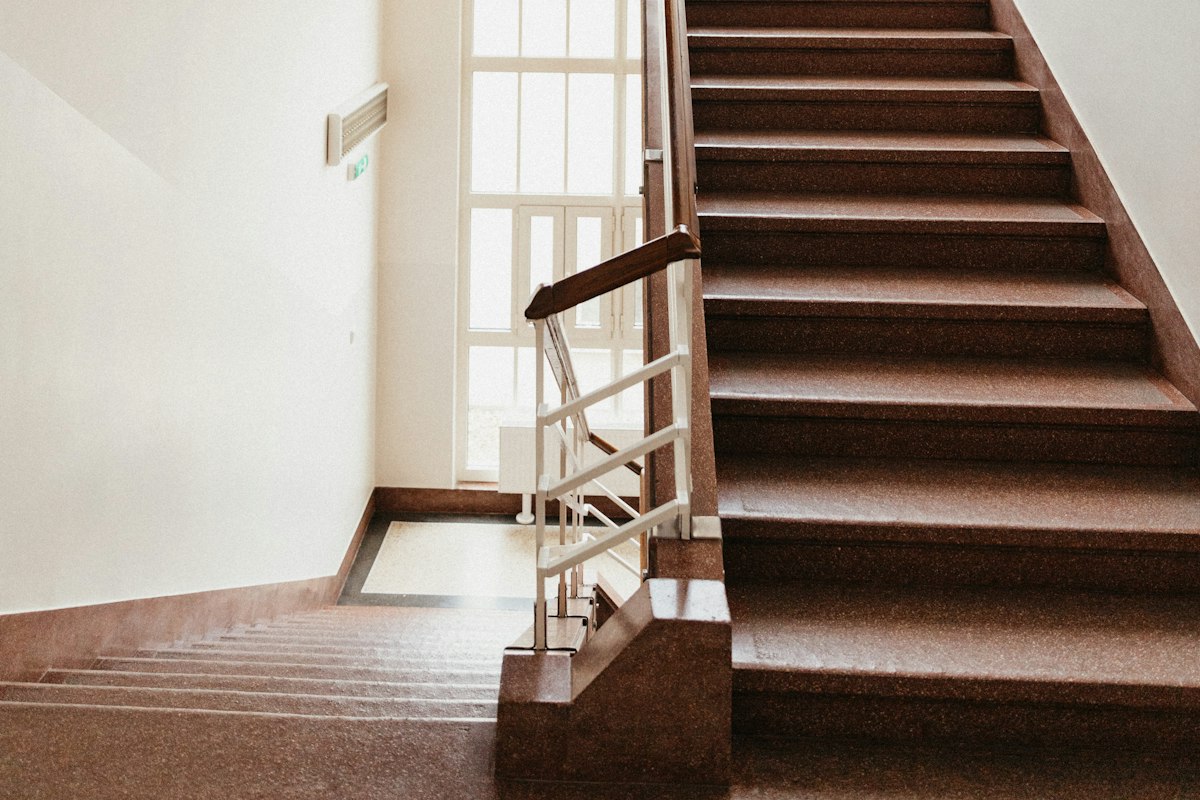
Hardwood treads give a staircase the most finished look, especially when they run off a wood main floor. They also last: a worn tread can be sanded and refinished instead of torn out. Treads can be matched to most of our hardwood flooring lines.
The trade-off is traction. Hardwood stairs in socks are a real hazard for kids and older adults, and Front Range winters keep a lot of households in socks and slippers for months. That's why we so often pair hardwood treads with a runner. Converting carpeted stairs? Our upcoming carpet-to-hardwood stair guide walks through the process.
LVP With Stair Nosing: The Pet and Spill Answer
LVP treads suit homes where the main level is already LVP, and they shrug off claw marks and spills. The longest-lasting luxury vinyl carries a 20+ mil wear layer.
On a staircase, LVP has one non-negotiable rule: it gets glued down. Our breakdown of LVP installation methods lists stairs as glue-down only, with full tread contact and no floating or loose-lay. The nosing (flush or overlap) makes or breaks safety.
On hard-surface stairs, the tread rarely causes the trouble; the edge does. A nosing that isn't fully bonded flexes under a heel, and that flex is where a slip starts. Consistent rise and run from step to step, a secured nosing and an anchored handrail are the three things we check before calling any staircase done.
Decision Matrix: The Right Stair Floor for Your Household
- If you have toddlers or young kids, then choose carpet over an 8 lb pad, or hardwood treads with a runner.
- If you have dogs, then choose LVP treads with a glued nosing, or a dense cut-pile carpet; skip loop styles where a claw can catch. Our pet-friendly flooring guide grades each material on scratches and stains.
- If an older adult uses the stairs daily, then choose carpet or a runner for grip, risers that contrast with the treads so each edge is easy to read, and a handrail that doesn't move.
- If the stairs land on a hardwood main floor, then match hardwood treads to it and add a runner if anyone walks them in socks.
- If the carpet is simply worn and the budget is tight, then replace the carpet and pad and keep the structure as is.
Runners and Rugs: The Middle Ground
A runner gives you hardwood's look with carpet's grip and quiet. The wood stays intact underneath, and runners go on fully wrapped or Hollywood-style. The edge work is the same craft behind our custom area rugs: broadloom cut to size and finished with binding or serging, with most rugs ready in 1 to 2 weeks.
The same service covers hallway runners and room rugs.
The Bottom Line
- Carpet: quality carpet lasts 10 to 15 years with proper care, and stairs are where it wears first. Spec an 8 lb pad.
- LVP: 15 to 25 years with proper care; glue-down only on stairs.
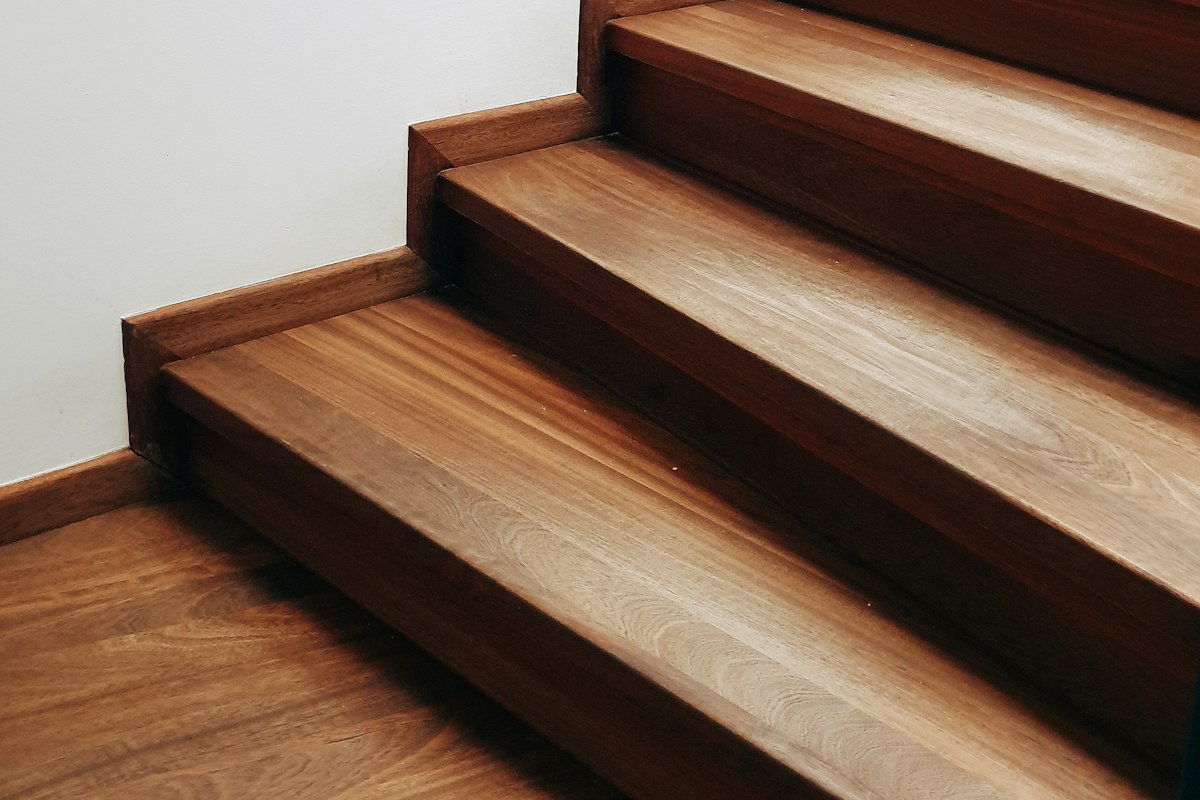
- Hardwood: refinishable, so the tread outlasts its finish. The best flooring for stairs in a busy home is often hardwood plus a runner.
- Timeline and cost: a standard straight staircase takes 1 to 2 days, and full hard-surface renovations with treads, risers and nosings run $1,500-$5,000+ on our custom stairs and railings page.
Talk Through Your Staircase With Our Castle Rock Team
Bring a photo of your stairs, a count of the steps and a note on who uses them, and we'll lay the three options side by side with samples. Contact our Castle Rock showroom to set up a time.

Adam Clements
Owner, Colorado Carpet & Flooring
Adam Clements owns Colorado Carpet & Flooring, the family-owned Castle Rock flooring store that has served the Front Range since 2008 and completed more than 15,000 homes. His team's focus here: stair flooring selection and installation, including stair pad specification, hardwood and LVP treads, and nosing attachment. The crew is factory-trained and certified by Shaw, Mohawk and COREtec, licensed and insured, and every installation is backed by a 1-year labor warranty. Meet the team.