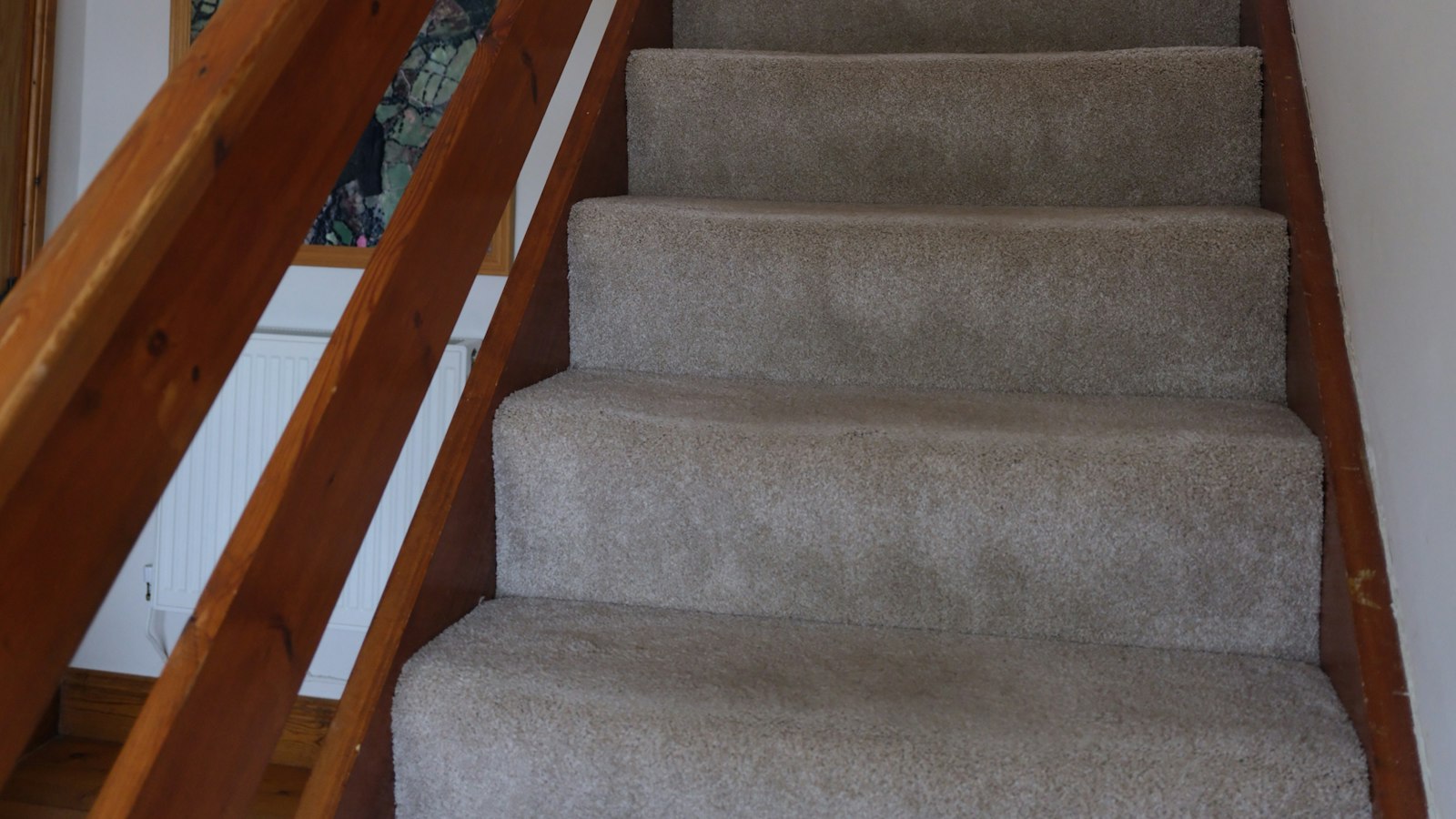
Best Carpet for Stairs: Durability, Pile & Safety
Which carpet holds up on stairs: why a low, dense cut pile in nylon beats tall plush, why loop pile and dogs don't mix, and how an 8 lb pad and a wrapped install change wear and footing on every step.
Stairs are where carpet fails first, so the best carpet for stairs is built for abuse: a low, dense cut pile in a resilient fiber, over a thin, firm pad, installed tight to every nosing. That's the short version of what we spec on staircases from Castle Rock to the north Denver suburbs.
The longer version is below, from the install crews at Colorado Carpet & Flooring: which constructions hold up, why loop pile and dogs don't mix, and how pad and install style change both wear and footing. If you're still deciding between carpet, hardwood and LVP, start with our stair flooring comparison guide; stair carpet pricing gets its own cost guide, publishing soon.
Why Stairs Wear Carpet Out Faster Than Any Room
On a floor, foot traffic spreads out. On a stair, every step lands on the same narrow strip behind the nosing, and the carpet is bent over a hard edge at each tread. That bend opens the pile and exposes the backing, a look installers call "grinning."
Our builder-grade upgrade guide puts it bluntly: stairs destroy cheap carpet faster than any other area in the house. We see it in new builds where the stairs got the same thin carpet as the bedrooms.
The Best Carpet for Stairs, Ranked by Construction
The terms below (pile height, density, twist, face weight) are defined in our carpet buying guide. Here's how each construction behaves on a stair.
| Construction | On a Stair | Our Call |
|---|---|---|
| Low, dense cut pile (frieze or tight textured) | Twisted fibers hide footprints and recover from crushing; holds a crisp edge at the nosing | First choice for most homes |
| Berber and loop | Looped construction resists crushing well | Good for pet-free homes; risky with dogs |
| Cut-loop pattern | Hides wear, but pattern has to line up step to step | Fine if the installer plans the pattern |
| Tall plush or Saxony | Shows crush and grinning at the nosing quickly | Save it for the bedrooms |
The Best Carpet Pile Height for Stairs Is Low
Short pile wraps a nosing cleanly, so you can see where each step ends. That matters for safety: a tall, soft pile blurs the edge and lets your heel sink and roll. When you compare samples, push your thumb into the pile. If you hit backing quickly and the yarn rebounds, it's a stair candidate.
Bend the sample over the edge of a counter or a step with the pile facing out. If the backing shows through at the fold, it will show at every nosing on your staircase.
Fiber: Why Nylon Earns the Stairs
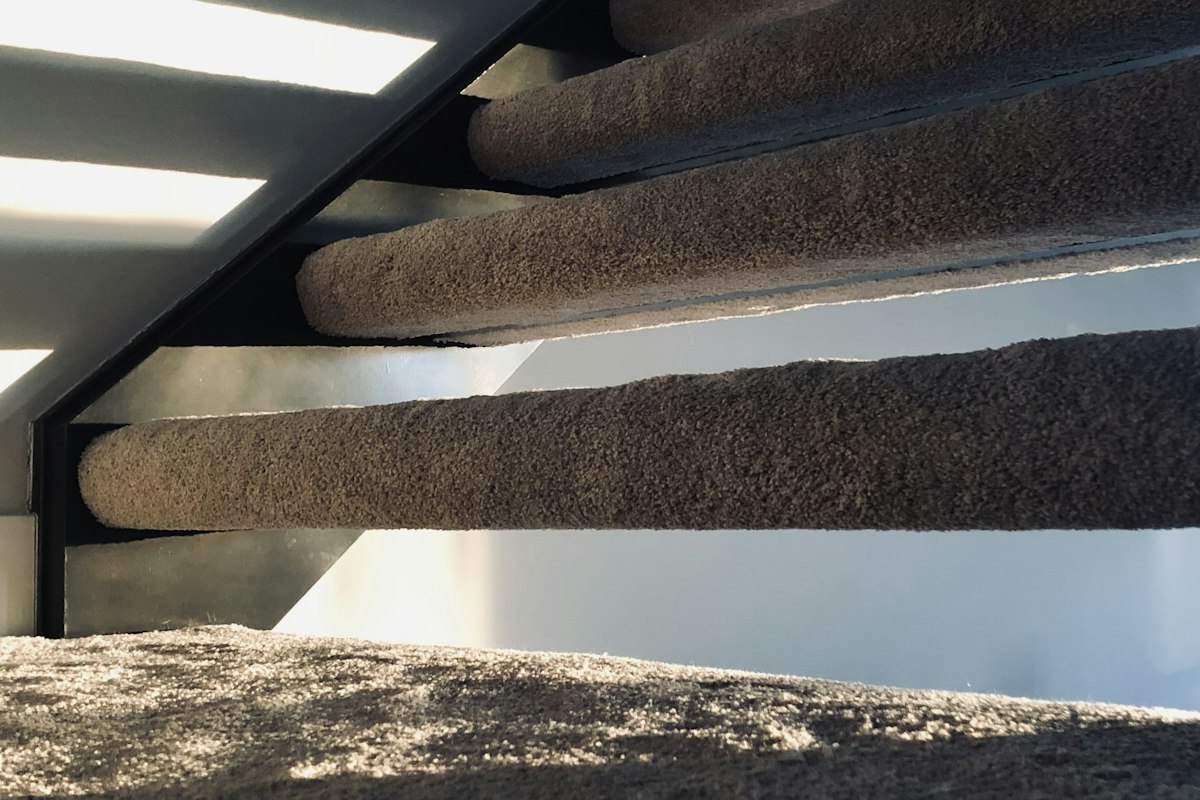
Our carpet collection page calls nylon the gold standard for durability, best for stairs and high-traffic areas, because it bounces back from crushing. Our carpet comeback article lands on the same split: triexta (SmartStrand) for bedrooms and living spaces, Nylon 6,6 for stairs and hallways.
Triexta works on stairs when softness ranks high. Polyester (PET) is soft and stain resistant, but it scores lowest on durability of the four fibers on our carpet page, and stairs are where that gap shows.
Dogs and Loop Pile
Berber's looped construction resists crushing, which is why our carpet page lists it as excellent for stairs. The problem is claws. A dog taking stairs at speed digs in at the nosing, a claw catches a loop, and the pull can run down the row. The fix is a dense cut pile in nylon or triexta, where there's no loop to snag. For homes with pets, Shaw's Pet Perfect carpet line is engineered for stain and odor resistance.
Pad and Install Style Decide Footing
Pad is one line of a stair quote and a big part of how the stairs feel. Our carpet padding guide sets stairs at an 8 lb density minimum regardless of carpet style, kept thin (its stair row caps pad at 3/8 inch), because thick pad on a stair is a fall hazard.
Install style matters too. In a waterfall install, the carpet drops straight from the nosing to the next tread, leaving a small gap behind it. In a Hollywood (or upholstered) install, the carpet wraps under the nosing and is fastened to the riser, so it hugs the step. The wrapped style gives a sharper, easier-to-read edge and less carpet movement at the nosing. Our carpet installation checklist covers the stretch and tack strip standards behind both.
Decision Matrix: Match the Carpet to the Staircase
- If dogs use the stairs, then choose a dense cut pile in nylon or triexta and skip loops.
- If the stairs carry the whole household's traffic, then choose nylon with a tight twist over an 8 lb pad.
- If softness is the priority, then choose triexta in a low cut pile, not a tall plush.
- If you love the look of Berber and have no pets, then a tight, low loop can work; pair it with thin, dense pad.
- If an older adult uses the stairs, then choose a low pile and a wrapped install so each edge reads clearly.
- If the carpet has a pattern, then ask how the installer will line it up from step to step.
Bring Your Stair Carpet Questions to Our Castle Rock Team
The fastest way to choose is to bend samples over your own stairs, in your own light. Our shop-at-home service brings them to you, or contact our Castle Rock showroom and we'll set up a time to walk through stair-rated options.

Adam Clements
Owner, Colorado Carpet & Flooring
Adam Clements owns Colorado Carpet & Flooring, the family-owned Castle Rock flooring store that has served the Front Range since 2008 and completed more than 15,000 homes. His team's focus here: carpet selection and installation for stairs, including fiber and pile choice, stair pad specification and wrapped installs. The crew is factory-trained and certified by Shaw, Mohawk and COREtec, licensed and insured, and every installation is backed by a 1-year labor warranty. Meet the team.