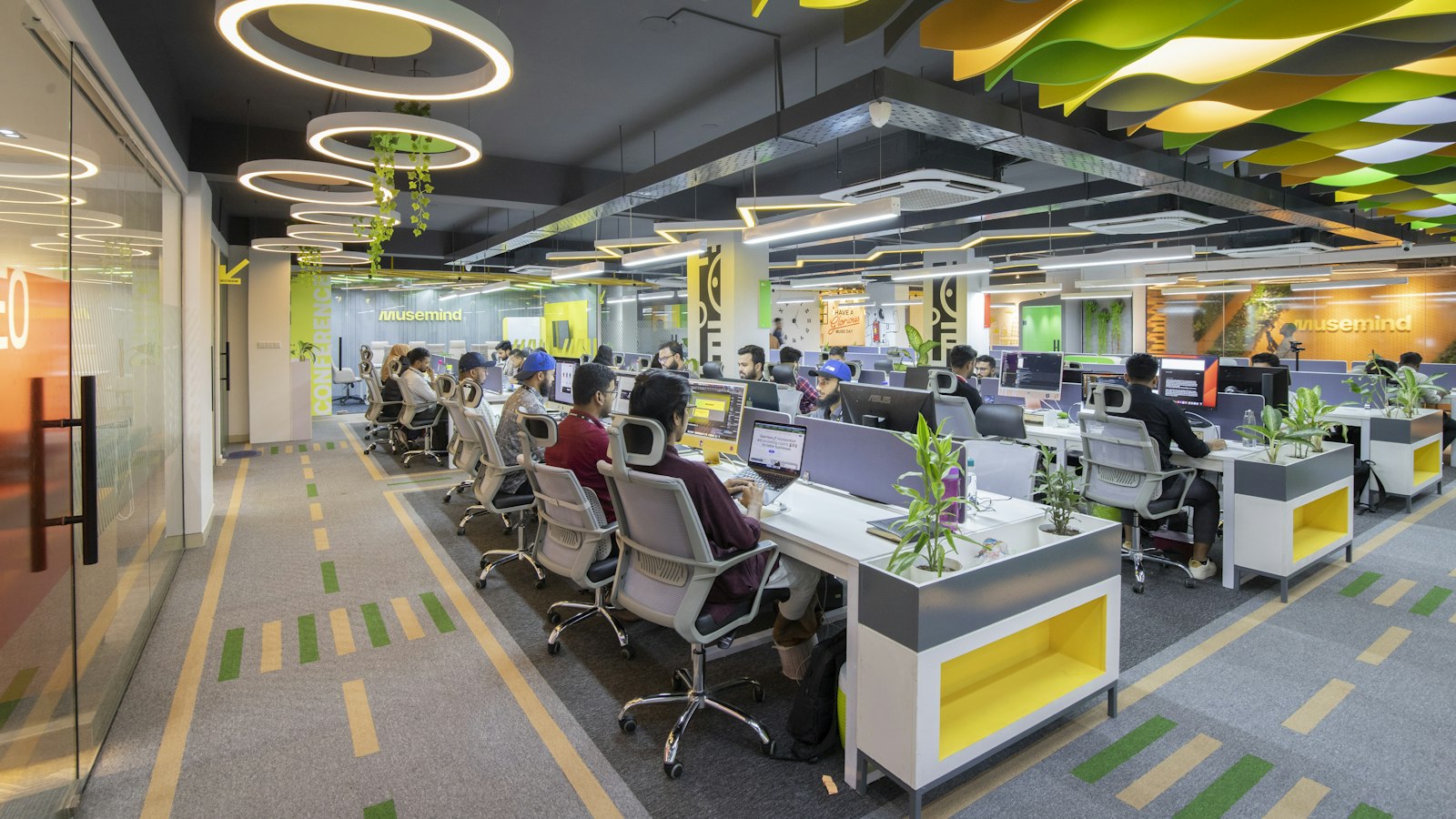
Carpet Tile vs. Broadloom for Offices: A Facility Manager's Comparison
A facility manager's comparison of carpet tile and broadloom for offices: install disruption, spot replacement and dye lots, acoustics, look, and the logic behind lifecycle cost, with a decision matrix by space.
Carpet tile vs broadloom is the first fork in most office flooring decisions we price for Denver metro businesses, and the answer depends on how your space gets used and reconfigured. We're Colorado Carpet & Flooring, a family-owned store in Castle Rock, and Q4 is when facility managers ask, because budgets are due and the holiday closure is the cleanest install window of the year.
This is the decision guide that sits under our commercial flooring services overview.
Carpet Tile vs. Broadloom: Five Factors Side by Side
Broadloom is wall-to-wall carpet cut from a roll. Carpet tile is modular squares with a hard or cushion backing.
| Factor | Carpet Tile | Broadloom |
|---|---|---|
| Install disruption | Can go down under jacked furniture, zone by zone | Rooms generally need to be cleared |
| Spot replacement | Swap or rotate individual tiles | Patch requires cutting in a new piece and seaming it |
| Format | 18x18 and 24x24 inch modules (Philadelphia Commercial) | 12, 13.5 or 15 ft roll widths (per CRI) |
| Look | Grid of module joints; patterns, borders, wayfinding | Fewer seams, a continuous field of color |
| Underfoot feel | Firm with hard backing; softer with cushion backing | Depends on the cushion or pad chosen |

Install Disruption Is Where Tile Usually Wins
The Carpet and Rug Institute's guidance on choosing commercial carpet puts it plainly: "With carpet tiles, installers simply lift furniture with a 'jack' system and install the tiles underneath." CRI adds that businesses "can recarpet an entire office area in one overnight shift rather than disrupting an office for days."
That matters most in open-plan offices with systems furniture, where rebuilding workstations can cost more in downtime than the carpet. Broadloom generally needs an empty room. We do schedule night and weekend installs for either product, which softens the impact but doesn't change the math.
Either format is usually glued down, so concrete has to be flat, dry and clean first; our subfloor preparation checklist covers the 3/16 inch in 10 feet flatness standard and moisture limits.
Spot Replacement and the Dye-Lot Problem
Tile's core selling point is that a stain or worn chair zone doesn't condemn the whole floor. CRI notes that "where traffic paths or soiling occur, rotating or replacing individual tiles is an easy and cost-effective solution." With broadloom, damage means seaming in a patch and hoping pile direction and color line up.
A regular call from offices that bought tile years ago is for "just a few replacement tiles," and that's where the plan falls apart. The style may be discontinued, and a new production run can read a shade off next to tiles that have seen years of cleaning. The fix is cheap at install: order extra cartons from the same dye lot and store them on site.
Acoustics and Underfoot Feel
CRI calls carpet "an outstanding sound absorptive material," in either format; backing and cushion are the variable. Hard-backed tiles (PVC, polyester or polyethylene in CRI's list) give dimensional stability but feel firm. Cushion-backed tiles and broadloom over pad feel softer underfoot.
If you have an acoustic target, ask for tested sound data and compare it with the IIC and STC ratings in our sound-reducing floor installation guide. The ratings mean the same thing in an office over another tenant.
Look: Seams, Patterns and Wayfinding
Broadloom's strength is visual calm: CRI lists widths of 12, 13.5 or 15 feet, so boardrooms get a continuous field of color. Any room wider than the roll still needs a seam; our carpet seam placement guide covers where they belong.
Tile's strength is flexibility. Mixed colorways create borders and wayfinding paths, and monolithic, quarter-turn or ashlar layouts change how the grid reads. A busy pattern hides joints better than a flat solid.
Lifecycle Cost: The Logic Without Invented Numbers
We won't hand you a cost model built on made-up figures. Here's the logic, so you can plug in your own quotes.
- Material: For reference, Philadelphia Commercial carpet tile typically runs $2 to $6 per sq ft for materials, depending on the collection. Compare both formats at the same spec level.
- Waste: Broadloom comes off a fixed-width roll, so odd room dimensions create drop. Tile is cut at the perimeter only.
- Downtime: Count clearing rooms and lost work hours, not just the invoice.
- Replacement: Tile lets you replace a corridor instead of a whole floor. Broadloom tends to be replaced all at once.
The lowest bid isn't the lowest cost
Broadloom sometimes wins the day-one quote, and that's the number that lands in the budget. The trouble shows up when one traffic lane wears through and the only fix is the whole room. We price both formats for the same space and list downtime and future replacement scope next to each total. That usually settles it in one meeting.
Decision Matrix: Tile or Broadloom by Space
- If the space is open-plan with systems furniture that can't easily move, then carpet tile.
- If the room is a boardroom or executive office where a continuous look matters most, then broadloom.
- If wear concentrates in predictable zones, then carpet tile with stored attic stock.
- If softness underfoot is the priority, then broadloom over cushion or cushion-backed tile.
- If the building mixes both needs, then tile in work areas and broadloom in conference rooms.
That mix is easy to source: Engineered Floors' Pentz Commercial line offers both carpet tile and broadloom, as does Philadelphia Commercial.
Plan Your Office Carpet Project With Our Castle Rock Team
Get both formats priced for your actual floor plan before the budget locks. Contact our Castle Rock team to set up an on-site walkthrough, or start with a free professional measurement so your quotes are based on real dimensions.

Adam Clements
Owner, Colorado Carpet & Flooring
Adam Clements owns Colorado Carpet & Flooring, the family-owned Castle Rock flooring store that has served the Front Range since 2008 and completed more than 15,000 homes. His team's focus here: commercial carpet tile and broadloom specification and installation for offices and retail spaces, including seam planning and substrate prep. The crew is factory-trained and certified by Shaw, Mohawk and COREtec, licensed and insured, and every installation is backed by a 1-year labor warranty. Meet the team.