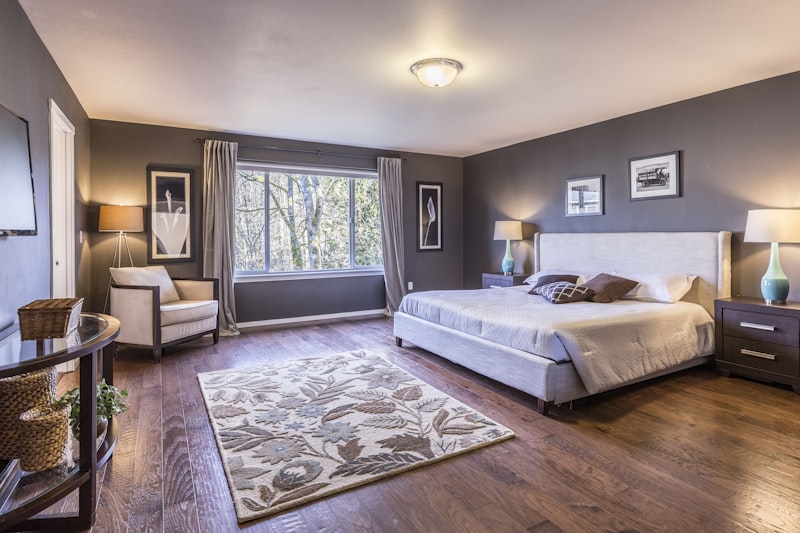
Engineered Hardwood Over Radiant Heat and Basements
Solid hardwood fails over radiant heat and basement slabs. Why engineered wins, the moisture testing and vapor barriers Colorado basements need, radiant temperature rules, and how we install it over concrete.
I get asked about solid oak for two rooms almost every week: the finished basement, and the main level that a builder ran radiant tubing through. In both cases my answer is the same. Use engineered hardwood, not solid. This is not a budget compromise or a downgrade. It is a construction decision based on how wood behaves against moisture and heat. Solid hardwood is one species milled into a plank, so it swells and shrinks across its full thickness with every change in the room around it. Engineered hardwood is a real wood wear layer bonded over a cross-laminated multi-ply or HDF core. Those cross-grain layers fight each other when moisture or heat tries to move them, and that is exactly the stability a Colorado basement or a radiant floor demands.
Why Solid Hardwood Fails Below Grade And Over Radiant
Solid hardwood wants a stable subfloor and a stable climate. A below-grade slab gives it neither. Concrete is a moisture reservoir, and vapor moves upward through it year round. Fasten solid oak over that slab and the boards drink that vapor, cup along their edges, and eventually crown in the center. Over radiant heat the failure mode is different but just as reliable. Every time the system cycles from cool to warm and back, a solid plank expands and contracts across its whole width. Do that a few hundred times across a heating season and you get face checking, splits that open along the grain, and gaps at the seams wide enough to catch a coin. Engineered flooring absorbs both stresses because its core simply does not move the way a single piece of oak does.
The Moisture Reality Below A Colorado Basement Slab
Before any hardwood goes over concrete, I test the slab. The standard is ASTM F-2170, in-situ relative humidity probes drilled to 40 percent of slab depth, sealed, and read after a minimum of 72 hours. Most engineered hardwood manufacturers set their warranty threshold at 75 to 80 percent RH. Above that number, the floor goes down only after a moisture mitigation membrane is applied, or it does not go down at all. The Colorado wrinkle is that a slab reading is not permanent. Douglas County sits on clay-heavy soil, and the water table under many Castle Rock, Parker, and Highlands Ranch neighborhoods rises hard with spring snowmelt. A below-grade slab I read at 71 percent in September can push past 80 percent by May. I document the season on every test, and when a dry-season reading pairs with a spring install date, I put that risk in writing before the homeowner picks a product. Our full walk-through of slab testing lives in the concrete moisture and vapor barrier guide.
Match The Situation To The Right Engineered Build
The table below is the framework I walk clients through. It pairs the room situation with why solid fails, the engineered construction I specify, the install method, and the one moisture step you cannot skip.
| Scenario | Why Solid Fails | Recommended Engineered Build | Install Method | Moisture Step Required |
|---|---|---|---|---|
| Radiant heat over slab | Thermal cycling causes checking and seam gaps | Radiant-rated engineered, thin wear layer, multi-ply or HDF core | Full glue-down with the maker's radiant adhesive | ASTM F-2170 below 75%; confirm max surface temp rating |
| Unheated basement slab (below grade) | Vapor from concrete cups and crowns solid boards | Engineered with stable core; 3/8" to 1/2" thickness | Floating over pad with vapor barrier, or glue with membrane | 6-mil vapor barrier minimum; membrane if RH is high |
| On-grade slab, spring install | Seasonal water table lifts slab RH past threshold | Engineered floating or glue-down, warranty-rated for slab | Floating with integrated barrier underlayment | Re-test within one week of install; document season |
| Above-grade over plywood | Low winter RH gaps solid; engineered stays tight | Thicker engineered (1/2" plus) or solid both viable | Nail-down or floating over plywood | Acclimate 3 to 5 days; no slab membrane needed |
| Radiant over gypsum-poured floor | Solid splits as poured underlayment dries and heats | Radiant-rated engineered, floating preferred | Floating over compatible thermal pad | Confirm gypsum fully cured; probe moisture first |
The Heat Reality Over Radiant Systems
Radiant floors are common in newer Douglas County custom homes, and I love them under the right flooring. The rule that protects the wood is simple: the surface temperature of the floor should never exceed roughly 80°F. Push hotter than that and even a stable engineered board starts to dry from the top down and check. The other rule is the startup ramp. When a radiant system fires up for the first time in fall, or after a new floor is laid, the water temperature has to come up in slow stages, commonly 5°F per day, not all at once. A cold slab jumped straight to full output shocks the flooring and the adhesive both. Finally, the product itself has to be labeled radiant-rated by the manufacturer. Not every engineered line qualifies, and installing a non-rated board over tubing voids the warranty on the spot. I verify that rating in writing before I order a single box.
A Castle Pines Radiant Floor That Told On Its Own Thermostat
A homeowner in Castle Pines called me after a floor another crew had installed over radiant heat started gapping badly by its second winter. When I put my infrared thermometer on the surface directly over a manifold run, it read 91°F. The thermostat had been set to drive the slab hard on cold mornings, and nobody had capped the surface temperature. The engineered boards themselves were fine product, but they had been run 11 degrees over the 80°F ceiling for two heating seasons and had dried and checked along the seams. We could not un-check the wood. What we could do was reset the system to a slow 5°F daily ramp, cap the surface at 80°F, and replace the worst two rows. When I re-measured the slab moisture before that repair, the ASTM F-2170 probe read 68 percent RH, well within range, which confirmed heat, not moisture, had been the culprit. The lesson I give every radiant client now: the thermostat setting is part of the flooring warranty.
Install Methods Over Slab: Floating Versus Glue-Down
Two methods put engineered hardwood over a slab, and each has its place. Floating means the planks lock to each other over a pad or underlayment and never touch the concrete. It is faster, it is reversible, and it pairs naturally with a 6-mil vapor barrier or an integrated barrier underlayment. For most Colorado basement jobs, floating is my default. Full glue-down bonds each board to the slab with a moisture-rated adhesive, and it is the method I favor over radiant heat because that direct contact transfers warmth evenly and keeps boards from telegraphing hollow spots. Glue-down demands more from the slab: it has to be flat, clean, and inside the RH threshold, and on a marginal slab I trowel a moisture-control membrane first. Whichever method a room calls for, the moisture test comes before the method decision, never after. If you want the deeper comparison of the two hardwood constructions, our engineered versus solid hardwood breakdown covers it, and you can see the lines we stock on our hardwood flooring page.
Checklist For A Below-Grade Or Radiant Install
Run this checklist before you commit to a product. Every line is a place I have watched a floor fail when someone skipped it.
| Step | What To Confirm | Pass Condition |
|---|---|---|
| Slab RH test | ASTM F-2170 probes read after 72 hours | Below 75 to 80% per the product warranty |
| Season timing | Test date versus planned install date | Re-test within a week if installing March to June |
| Vapor barrier | Barrier matched to the RH reading | 6-mil poly minimum; membrane if RH runs high |
| Product rating | Radiant and slab suitability on the spec sheet | Labeled radiant-rated before ordering |
| Surface temp cap | Radiant thermostat and manifold limits | Floor surface never above 80°F |
| Startup ramp | First heating cycle after install | Raise water temp about 5°F per day |
| Acclimation | Boxes in the room at living conditions | 3 to 5 days for engineered before install |
Get the slab reading, the product rating, and the thermostat settings right, and engineered hardwood will hold flat and tight over a basement or a radiant floor for decades. Get any one of them wrong and the wood pays for it. If you are weighing a below-grade or radiant hardwood project, browse the lines on our hardwood flooring page, then let us test your slab first. To get that testing scheduled before you buy a product, request a free estimate.

Adam Clements
Owner, Colorado Carpet & Flooring
Adam Clements has spent 27 years installing hardwood over concrete slabs and radiant heat systems across Castle Rock, Castle Pines, and the wider Douglas County and Denver metro area. He founded Colorado Carpet & Flooring and has guided hundreds of homeowners through below-grade and radiant hardwood decisions that out-of-state installers routinely get wrong.